HASL, ENIG, Immersion Silver or OSP: Which PCB Surface Finish to Specify
Buyer Guides · 18 November 2026
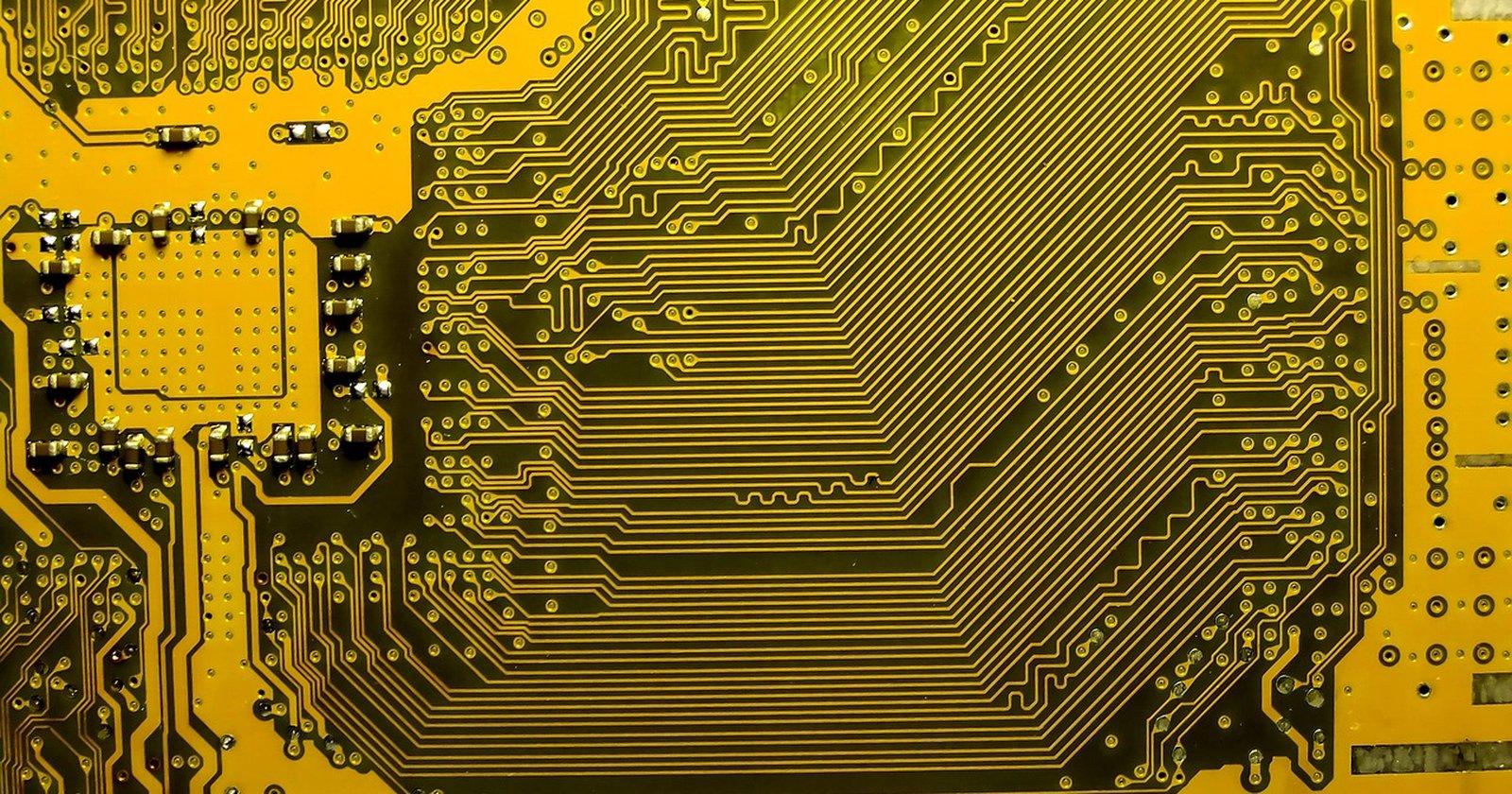
The surface finish is the thin coating that protects exposed copper pads on a bare board until components are soldered to them. It affects how flat the pads are, how long boards can sit in stores, how well they solder and what they cost. This guide explains the common finishes, where each one fits, and what to write on your drawing.
Why the finish matters
Bare copper oxidises quickly and becomes hard to solder. A finish keeps the pads solderable between fabrication and assembly. The choice then shapes three things: whether fine-pitch parts such as BGAs sit flat, how long the boards keep their solderability, and whether the pads can take other jobs, such as press-fit connectors, wire bonding or edge contacts.
HASL and lead-free HASL
Hot air solder levelling (HASL) dips the board in molten solder and blows off the excess with hot air. It is long established, solders well and keeps for a long time in stores. Its weakness is flatness: the solder coat is uneven, so it is not the usual choice for fine-pitch parts.
Traditional HASL uses tin-lead solder, which does not suit products that must meet RoHS. Lead-free HASL uses a lead-free alloy instead. It shares HASL's uneven surface, and the higher process temperature puts more thermal stress on the board.
Suits: through-hole and larger surface-mount parts, cost-sensitive work, long storage.
ENIG
Electroless nickel immersion gold (ENIG) deposits a layer of nickel and then a thin layer of gold. It is flat, keeps well and is widely used for fine-pitch and BGA designs. It costs more than HASL or OSP. The known process risk is "black pad", a defect in the nickel layer, which is why the plating standard matters. IPC-4552 is the IPC specification for ENIG plating for printed boards, and you can ask your manufacturer to work to it.
Suits: fine pitch and BGAs, long shelf life, products that must be RoHS compliant.
ENEPIG
ENEPIG adds a layer of electroless palladium between the nickel and the gold. The result is very flat, can be wire bonded and avoids ENIG's black pad risk. It is among the more expensive finishes. IPC-4556 is the IPC specification for ENEPIG plating.
Suits: wire bonding, mixed soldering and bonding on one board, high-reliability work.
Immersion silver
Immersion silver deposits a thin silver layer directly on the copper. It is flat and solders well, and some manufacturers recommend it for wire bonding. Silver tarnishes, so boards need careful handling and sealed packaging, and should be assembled soon after they leave storage. IPC-4553 is the IPC specification for immersion silver plating.
Suits: fine pitch at lower cost than ENIG, with good stores control.
Immersion tin
Immersion tin is flat and is a common choice for press-fit connectors. Its shelf life is limited, as the tin and copper slowly combine, and it can be damaged in handling. Tin whiskers are a known concern. IPC-4554 is the IPC specification for immersion tin plating.
Suits: press-fit connectors and backplanes.
OSP
An organic solderability preservative (OSP) is a thin organic coating on the copper. It is flat, low cost and lead-free. It has a shorter shelf life than metallic finishes, is sensitive to handling, and leaves copper exposed after assembly, which can matter for in-circuit test probing.
Suits: high-volume work assembled soon after fabrication, where cost is the main driver.
Quick comparison
| Finish | Flatness | Shelf life | Typical use |
|---|---|---|---|
| HASL / lead-free HASL | Uneven | Long | General work, through-hole |
| ENIG | Flat | Long | Fine pitch, BGAs |
| ENEPIG | Very flat | Long | Wire bonding, high reliability |
| Immersion silver | Flat | Moderate, handle with care | Fine pitch at lower cost |
| Immersion tin | Flat | Limited | Press-fit connectors |
| OSP | Flat | Short | High volume, quick assembly |
Shelf life depends on packaging and storage, so ask your manufacturer for its own figure.
How to choose
Start with the parts on the board. Fine-pitch parts and BGAs point to a flat finish: ENIG, ENEPIG, immersion silver or OSP. Wire bonding points to ENEPIG. Press-fit connectors point to immersion tin. If none of these applies and RoHS is not required, HASL remains a sound, economical choice, and lead-free HASL covers RoHS products.
Then think about time. If boards will sit in stores for months, or ship to an assembler elsewhere, a finish with a long shelf life saves rework. If boards go straight to assembly in high volume, OSP may be the economical answer.
Finally, talk to your assembler. The finish has to suit their soldering process and any test fixtures, and they may already prefer one.
What to write on your drawing
- The finish by name, for example "ENIG to IPC-4552"
- Any thickness requirement the plating standard allows you to set
- Whether selective finishes are needed, such as hard gold on edge contacts
- Packaging and storage requirements, especially for silver and OSP
Questions to ask your manufacturer
- Which finishes do you apply in-house, and which do you subcontract?
- Which plating standard do you work to for this finish?
- What shelf life do you quote, and how are boards packed?
- Is there a lead-time or cost difference between the finishes I'm considering?
Where to go for more
IPC publishes the IPC-4550 family of plating specifications, including IPC-4552 (ENIG), IPC-4553 (immersion silver), IPC-4554 (immersion tin) and IPC-4556 (ENEPIG). For the RoHS rules that drive the move to lead-free finishes, see the UK government's RoHS guidance.
Find PCB manufacturers on PCB Directory
Browse rigid PCBs, HDI PCBs and flex and rigid-flex PCBs. Save the manufacturers that fit to your shortlist and send one enquiry, with your finish and drawing, to the whole shortlist at once. Our guide to choosing a PCB type covers the board itself.
For press enquiries about PCB Directory, contact pcb@pcbdirectory.co.uk.
Listings related to this article

Amphenol Invotec Ltd
Telford, Shropshire
From two UK sites, in Tamworth and Telford, Amphenol Invotec Ltd manufactures rigid, flex and flex-rigid printed circuit boards, including HDI constructions. It holds AS9100, ISO 9001, ISO 45001, UL, JOSCAR and Cyber Essentials certification, plus Nadcap accreditation at both facilities. The company supplies aerospace and defence, space, industrial, telecommunications and automotive customers, and offers flex assembly alongside its PCB fabrication business. It has traded as Amphenol Invotec since becoming part of Amphenol Corporation in 2015.
- Rigid
- Flexible
- Rigid-Flex
- HDI

Exception PCB
Tewkesbury, Gloucestershire
Exception PCB is a UK printed circuit board manufacturer based in Tewkesbury, Gloucestershire. Founded in 1977 and now part of the Connexion Technologies group, it produces multilayer, flex, rigid-flex, HDI, RF and hybrid boards, with quick-turn, prototype and low-volume manufacture, copper and resin via fill, design-for-manufacture review and 100% electrical test. The company is certified to AS9100D (EN9100:2018) and ISO 9001:2015, holds JOSCAR registration and Cyber Essentials certification, and supplies customers in aerospace, defence, space, automotive and transport, communications, energy and industrial, medical and motorsport.
- Rigid
- Flexible
- Rigid-Flex
- HDI

Graphic PLC
Crediton, Devon
Graphic PLC manufactures high-density interconnect, flex-rigid and multilayer rigid printed circuit boards up to 32 layers from its Crediton, Devon facility, part of the SOMACIS Group. The company holds AS9100, ISO 14001, ISO 45001, UL recognition and JOSCAR registration, and offers sequential build-up, advanced via technologies and applications engineering support from prototype through offshore volume production. It supplies aerospace, defence, space, medical and industrial customers requiring high-reliability bare-board fabrication.
- Rigid
- Flexible
- Rigid-Flex
- HDI

Total Circuit Solutions Ltd
Peterborough, Cambridgeshire
Total Circuit Solutions Ltd fabricates PCBs at its site near Peterborough, Cambridgeshire, and has served customers since 2011. It is certified to ISO 9001:2015 and RoHS and makes rigid, flexible, rigid-flex and HDI boards, from single-sided to 40-layer multilayer, with blind, buried and micro vias and FR4, Rogers, polyimide and PTFE materials. Orders run from prototype and fast-turn through to high-volume production, with automated optical and bare-board testing. PCB design, turn-key assembly, drilling and cutting are also offered, for aerospace and defence, automotive, commercial, energy, industrial, lighting, medical, space and telecoms customers.
- Rigid
- Flexible
- Rigid-Flex
- HDI

ZOT Integrated Manufacturing
Musselburgh, East Lothian
ZOT Integrated Manufacturing fabricates rigid, flexible, HDI and rigid-flex printed circuit boards from Musselburgh, East Lothian, and has traded since 1975. It holds ISO 9001:2015, ISO 13485, ISO 14001, AS9100, UL, Cyber Essentials Plus and JOSCAR accreditations. Production runs from prototype through to low, medium and high volumes. The company also provides assembly, turnkey component sourcing, cable and wire harness assembly, and box build, serving aerospace and defence, automotive, commercial, energy, industrial, medical, space, marine, consumer electronics and telecoms customers.
- Flexible
- Rigid
- HDI
- Rigid-Flex